
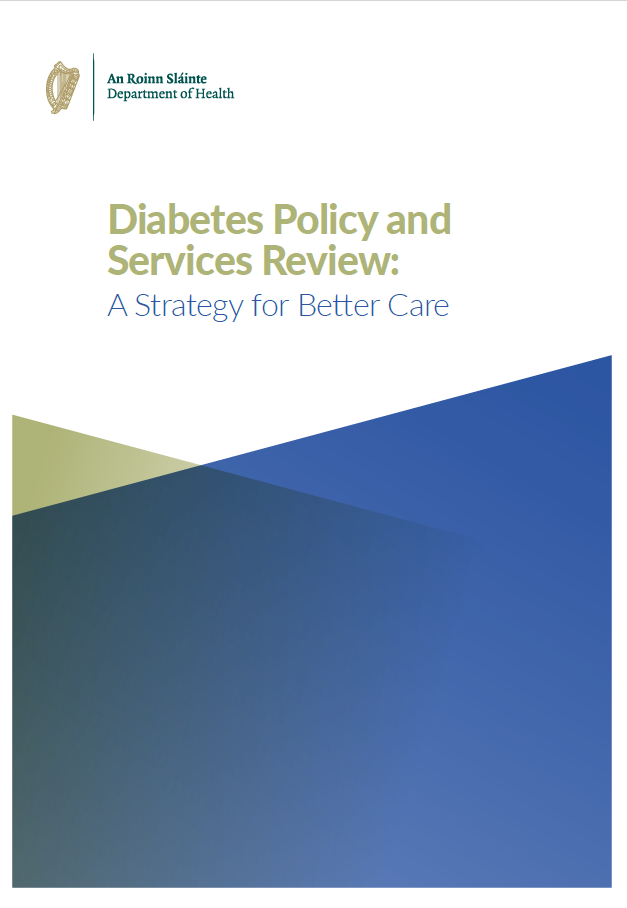
On Thursday, 21st May 2026, at Diabetes Ireland Conference and Exhibition (DICE), Minister for Health, Jennifer Carroll MacNeill TD, officially launched the ‘Diabetes Policy and Services Review Report: A Strategy for Better Care’ – a landmark, strategic document, which outlines the current gaps in diabetes care provision, and priority recommendations to improve care for people with diabetes in Ireland. See the Department of Health press release here.
See the full Strategy here
What does the report mean to me?
The report describes how diabetes care is currently provided, outlines the positive aspects of care in Ireland (e.g. Long-Term Illness Scheme), but focuses more on the gaps in care provision and limited access to essential services (e.g. transition care, psychological care, access to diabetes technology, structured education etc), it also includes an extensive analysis of staffing gaps around the country, identifies the shortfall in staffing levels and a description of missing services in each HSE Regional Health Area. Such analysis aims to equip health regions with information and guidance to improve and standardise care across the country.
As stated in the strategy document, ‘this report has identified both the significant advances made in understanding the measures necessary to provide a high standard of care to people living with diabetes, and identified the areas where services need to be developed and resources provided to ensure that those high standards (…) can be achieved.’ This means that the report aims to meet the needs and fill the gaps, standardise care across Ireland, and make sure that every person in Ireland receives the highest quality of care. It is important to note, though, that it is a long-term strategy, and the implementation of the priorities depends on multiple factors such as additional funding, HSE priorities and individual Health Region’s needs. It will take some time to implement the various elements of the strategy.
 The Diabetes Policy & Services Review Taskforce
What do the priorities and recommendations mean to me?
The Key Recommendations (priorities) (see Chapter 8 of the document) are divided into four major topics: service development, affordability and access to care, better support for people living with diabetes, and digital healthcare. There is also guidance outlined in terms of the timeline (short-, medium-, long-term) to achieve them.
- Service development
No matter where you live in Ireland, you should receive the same high standard of diabetes care, based on national and international best practice. Services should work in a more joined-up way, with regular checks and outcome monitoring through clinical audits to make sure care is safe and effective. It means that the first priority aims to standardise diabetes care nationwide, implement national diabetes audits (starting with the Irish Paediatric Diabetes Audit), continue the focus on prevention and early intervention, improve facilities and invest in developing posts for more diabetes specialists, including nurses, dietitians, podiatrists and psychologists. The improvements in diabetes care should happen within each HSE Health Region across acute, primary and community care and led by local diabetes leads, to ensure that access to specialist services (including pregnancy diabetes care, psychology support, diabetes technology, foot care and transition clinics), technology and modern treatments, and diabetes education are provided for all people within their health region. The goal is for people to get the right care, in the right place, at the right time, without long delays, need to travel long distances to access care, and with clear referral pathways. The priority also acknowledges the need to continue to fully staff community diabetes specialist teams, improve communication between hospitals, GPs and specialist community hubs, and ensure shorter waiting times and better local access to care.
- Affordability and Access to Care
The document recognises that the cost of care can prevent some people from getting regular diabetes support, especially for those without a Medical Card or GP Visit Card, and that missing regular reviews and treatment can increase the risk of serious complications. As stated in the report, the prioritisation of clinical need in the delivery of care for everyone with diabetes should be recognised as a long-term goal in the implementation of this report. Hopefully, in years to come, it will finally mean that clinical need, rather than income or reimbursement status, will be prioritised when making decisions on access to essential care for everyone.
The strategy also strongly supports the need to Expand Access to Diabetes Technology (Continuous Glucose Monitoring systems, insulin pumps, smart pens and hybrid closed-loop systems) based on clinical need (e.g. people using insulin), and not only based on the type of diabetes. It is recommended that access should be improved with more specialist technology clinics across Ireland, and better staff training to ensure expertise at all care levels. A specialist diabetes technology clinic should be available in each Health Region, where pump starts can be provided, whereas all clinics offering diabetes care should provide, at a minimum, follow-up care.
- Better Support for People Living with Diabetes
The strategy recognises that living with diabetes affects people much more than managing blood glucose levels. Better emotional support, easier access to services, improved education and more personalised care are needed throughout life stages such as young adulthood and pregnancy. This priority is focused on well-being of people living with diabetes, and a need for psychological support, better self-management, education and peer support. It highlights the need to empower people living with diabetes, improve the awareness of modern treatments and technologies, ensure that communication between the healthcare teams and people living with diabetes is respectful and non-judgemental, according to Language Matters Ireland recommendations. It highlights the need to support voluntary organisations such as Diabetes Ireland to provide peer and mental health and wellbeing supports, raising awareness of available technologies and options, standards of care and minimising the risk of long-term and short-term complications.
The strategy also highlights the need for developing specialist Young Adult diabetes clinics to better support the transition from paediatric to adult care. These clinics should offer more flexible and person-centred care, better psychological support, and offer alternative ways to connect with young people, as many young people struggle with the emotional, social and practical demands of managing diabetes independently. The aim is to stop young people “falling out of care” during transition to adult services and reduce the risk of early complications.
This report also highlights the need to better support women with pregestational or gestational diabetes before, during and after pregnancy. This section highlights the need for free medication for women with gestational diabetes, better post-pregnancy follow up and support, wider access to technology, e.g. CGM for women with diabetes in pregnancy and hybrid closed loop systems for those with type 1 diabetes. More specialist pregnancy diabetes staff and services should be provided in each Health Region. This recommendation is crucial to improve both maternal and baby health outcomes while giving women better support during a high-risk and demanding period.
- Mental health and wellbeing needs finally recognised
Overall, this strategy recognises that diabetes can have a major emotional and psychological impact which may adversely affect both adherence to treatment and quality of life. Access to appropriate Mental health and well-being supports is therefore essential. The Report recommends the development of a dedicated diabetes psychology team within every Health Region. In addition, specific training and guidelines should be developed to enable all health professionals working in diabetes care to recognise and respond to the psychological needs of people living with diabetes.
The strategy also recommends wider recognition and use of Diabetes Ireland Mental Health and Wellbeing programmes:
- COPE – for people with type 2 diabetes,
- T1 DREAMS for newly diagnosed adults with type 1 diabetes, and
- CARE for parents of children living with diabetes. Read more about our mental health and wellbeing programmes here.
This priority recognises the long-overdue gap, that mental health is a core part of diabetes care, not an optional extra.
- Digital Healthcare
Last, but not least, the strategy document emphasises the need for greater use of digital technology in improving diabetes care, and making services easier to access. This section highlights the need for more nationwide use of virtual appointments and online education, improved communication between healthcare systems, and supports the wider nationwide initiative of digital health transformation (e.g. electronic health records). The goal is to make diabetes care more efficient, accessible and connected, reducing delays and improving patient experience.
One of the most critical steps to improve care is to establish a National Diabetes Registry, which would create a secure national database of people living with diabetes in Ireland. This would help the health service understand the impact of diabetes diagnosis in Ireland, better identification of gaps or inequalities in care, the needs of people with diabetes (e.g. outcomes, complications), and improve care planning to meet those needs. Part of this initiative is to ensure improved IT systems and an adequate IT infrastructure to digitalise and modernise care. A national registry could help ensure diabetes services are planned based on the real needs of people living with diabetes, leading to more consistent and effective care. Based on the data, a Diabetes Modelling Platform is recommended, a system that can predict the long-term health and economic impact of different diabetes policies, treatments and prevention strategies in Ireland, which should help ensure future diabetes services and resources are directed toward the approaches that deliver the best health outcomes for people living with diabetes in Ireland.
 To sum up: It is just the beginning
The ‘Diabetes Policy and Services Review Report: A Strategy for Better Care’ represents a major milestone for the diabetes community in Ireland. It sets out a clear national vision, strong leadership, and a forward-looking framework aimed at optimum care for every person living with diabetes in Ireland, but it will take a long time, and significant investment, to see the agreed and necessary changes.
The report was developed by the Department of Health in partnership with the HSE National Clinical Programme for Diabetes and Diabetes Ireland, working collaboratively with more than 30 members of a dedicated multidisciplinary Taskforce. The Taskforce brought together expertise from across all areas of diabetes care, including adult acute and community services, general practice, paediatric diabetes care, and pregnancy care. It included healthcare professionals, researchers, health economists, policymakers, and most importantly people living with diabetes, ensuring that the lived experience of diabetes remained central to the recommendations and future direction of services.
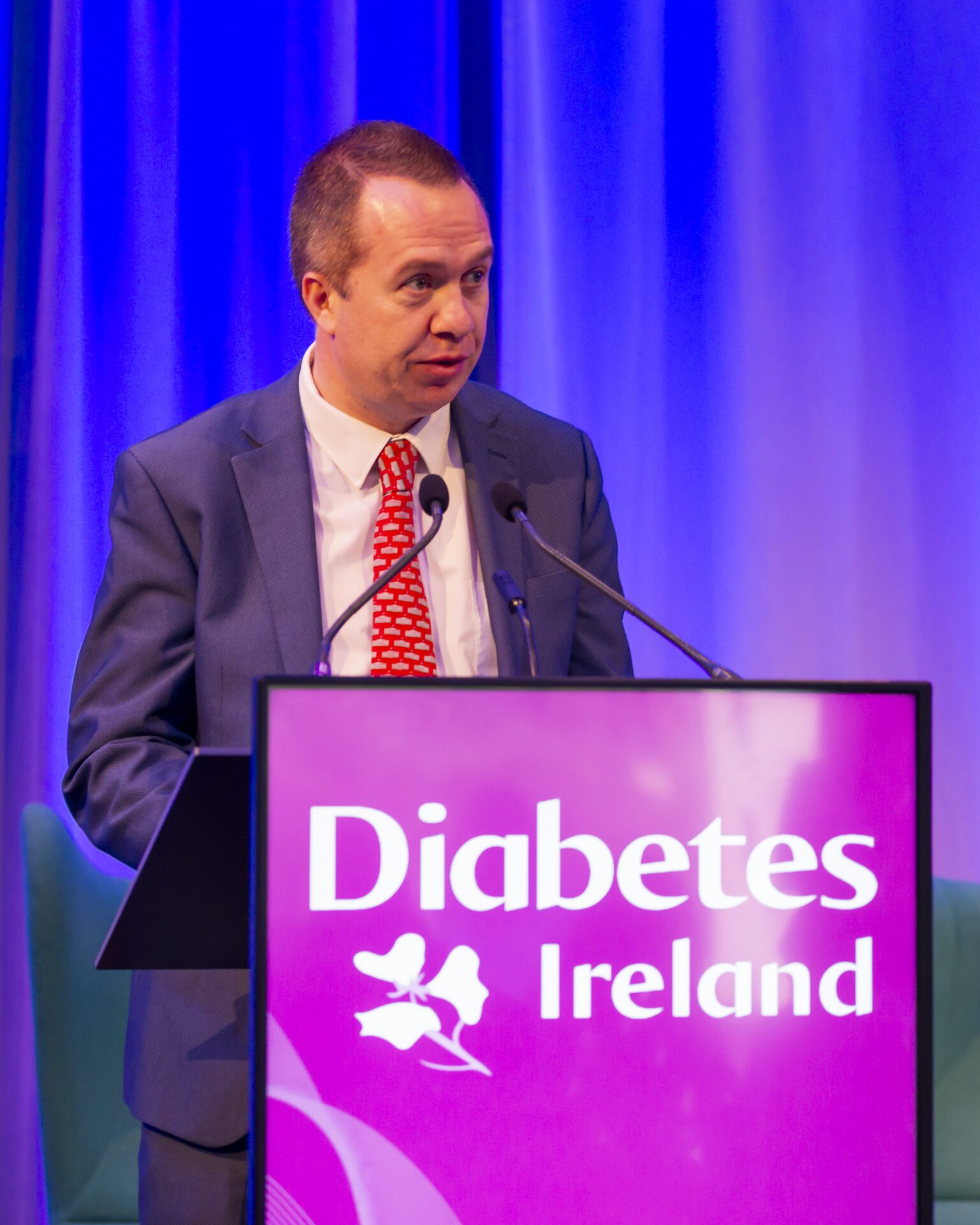
Professor Derek O’Keeffe at the launch of the Report
For the first time, Ireland now has an agreed National Diabetes Strategy to guide and strengthen diabetes services nationwide. The entire diabetes community worked collectively to achieve this important step forward. However, the greatest challenge now is ensuring that the strategy is fully implemented and that its priorities, recommendations and improvements in care are monitored over the coming years.
Additional developments will continue to be required in the years ahead, including enhanced screening for type 1 diabetes, expanded specialist supports, and improved services across all care settings, including residential and long-term care facilities. While addressing the major gaps identified within the report is an essential first step, continued oversight, accountability, and advocacy will be critical to ensure that implementation progresses effectively. All stakeholders, including healthcare professionals, people living with diabetes, policymakers, and the wider public, must continue to monitor progress and advocate for delivery of the commitments outlined in the strategy.
This report marks not the end of the journey, but the beginning of a significant opportunity and the very important phase of implementation. Diabetes Ireland will continue to work closely with the Department of Health and the HSE and will strongly advocate over the coming years to ensure that the priorities outlined in the strategy are fully realised for all people living with diabetes, and for those at risk of developing diabetes, across Ireland.